Disclosure: We may earn from purchases via our affiliate links, but this independence ensures our heart rate zone guides remain honest and unbiased for your fitness journey
Every fitness watch and chest strap on the market now spits out five colored zones during a workout, but most people never learn what those zones actually mean or what to do with them. If your training plan mentions “Zone 2” or your watch flashes “Zone 4 — high intensity,” this is the guide that explains what’s really happening in your body at each level, how to find your own numbers, and which zones actually matter for the goal you’re training toward.
The Five Zones, in Plain Terms
Zones are calculated as a percentage of your maximum heart rate (max HR), which almost every device estimates using the old 220-minus-age formula unless you’ve run a lab test or a supported field test (Garmin and Polar both offer these). That formula is rough — it can be off by 10-15 beats for plenty of people — so treat your watch’s zones as a starting point, not gospel.
- Zone 1 (50-60% max HR) — Recovery. Walking pace, easy spinning. You could hold a full conversation without pausing for breath. This is what an active recovery day or a cooldown looks like.
- Zone 2 (60-70% max HR) — Aerobic base. Conversational but you’d need to pause every few sentences. This is the “easy run” pace endurance athletes obsess over because it builds mitochondrial density and fat-burning efficiency without piling up fatigue.
- Zone 3 (70-80% max HR) — Tempo. Comfortably hard. You can speak in short phrases, not full sentences. Spend too much time here by accident (the classic mistake of “easy runs” that aren’t actually easy) and you get the fatigue of hard training without the peak adaptations of Zone 4-5 work — coaches call this the “gray zone.”
- Zone 4 (80-90% max HR) — Threshold. This is roughly your lactate threshold — the effort you could sustain for maybe 20-60 minutes at your fitness level. Talking is essentially impossible. Interval sessions and tempo efforts live here.
- Zone 5 (90-100% max HR) — VO2 max / anaerobic. All-out. Sprints, hill repeats, the last minute of a hard interval. You can only hold this for seconds to a couple of minutes at a time.
Finding Your Real Numbers (Not Just the Age Formula)
The 220-minus-age estimate is what ships by default on Apple Watch, most Garmin models, and Fitbit. It’s a population average, and individual max HR varies a lot at the same age. Three better options, in order of effort:
- Field test. Garmin devices (Forerunner, Fenix, Venu lines) and Polar watches have a built-in guided max-HR or lactate threshold test — usually a warm-up followed by a hard effort while the watch tracks your HR curve. Takes about 20-30 minutes and is free if you already own the watch.
- Threshold-based zones. Instead of max HR, some platforms (Garmin Connect, TrainingPeaks, Stryd) let you set zones off your lactate threshold heart rate, which several coaches consider more accurate for structuring training than max-HR percentages, especially for Zone 2/4 boundaries.
- Lab test. A VO2 max / lactate test at a sports science lab or performance clinic (often around $100-200) gives you real physiological breakpoints. Overkill for casual training, worth it if you’re training for a specific race and want to stop guessing.
Chest Strap vs Optical: Does Accuracy Matter Here?
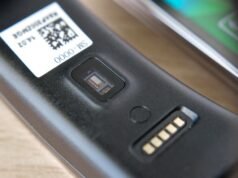
Zone training lives and dies on accurate real-time HR, and this is exactly where wrist-based optical sensors show their weakness — during intervals, lifting, or anything with wrist flexion, optical sensors can lag or spike incorrectly, which bleeds into the wrong zone being reported. If you’re training zones seriously, a chest strap like the Polar H10 or Garmin HRM-Pro Plus removes that variable; see our chest strap vs optical comparison for the full accuracy breakdown. For steady Zone 2 cardio at a stable pace, wrist-based is usually fine.
Our pick: Amazon Associates
Which Zone Should You Actually Train In?
| Goal | Primary zone focus | Why |
|---|---|---|
| General health / longevity | Zone 2, mostly | Builds aerobic base without excess fatigue; sustainable long-term |
| Marathon / endurance racing | 80% Zone 2, 20% Zone 4-5 | Polarized training — most volume easy, a small dose hard |
| 5K / short-distance speed | Zone 4-5 intervals + Zone 2 recovery | Threshold and VO2 max work drive speed gains |
| Fat loss | Zone 2-3, consistency over intensity | Sustainable volume beats occasional max-effort sessions for adherence |
| General strength/HIIT | Zone 3-5 in intervals, Zone 1 between sets | Interval structure naturally cycles through zones |
A Sample Week Using Zones (General Fitness)
Zones only pay off once they shape an actual weekly structure, not just a number you glance at mid-workout. A realistic week for someone training for general fitness, not a specific race, might look like: 2-3 Zone 2 sessions (30-45 min easy runs, rides, or brisk incline walks), 1 Zone 4 interval session (e.g. 5×3 minutes hard with 2 minutes easy between), 1 strength session where HR naturally bounces between Zone 2 and Zone 4 depending on rest periods, and 1-2 full Zone 1 recovery days. Most watches (Garmin Connect, Polar Flow, the Apple Fitness app) will total your minutes-per-zone over the week automatically, which is a faster sanity check than trying to remember how each session felt.
The Mistake Almost Everyone Makes
Most recreational runners and cyclists spend too much time in Zone 3 — the “comfortably hard” gray zone — because unstructured runs naturally drift there. It feels productive because you’re breathing hard, but you get neither the recovery benefit of Zone 2 nor the peak fitness gains of Zone 4-5. Coaches following polarized or pyramidal training models push athletes to keep easy days genuinely easy (Zone 1-2) so the hard days can actually be hard. If your “easy run” pace consistently reads Zone 3 on your watch, that’s usually a sign to slow down, not a sign your zones are miscalibrated.
FAQ
Do I need an expensive watch to train by zones?
No. Any device with continuous HR tracking — including budget options like the Amazfit Active 2 or a sub-$50 chest strap — gives you the number you need. The zone math is the same regardless of price.
Why does my watch’s Zone 2 feel too easy to be doing anything?
That’s normal and by design. Zone 2 should feel almost embarrassingly slow at first, especially if you’ve never trained it deliberately. Pace will improve over months as your aerobic base builds, even though the heart rate stays the same.
Should I use max-HR zones or lactate-threshold zones?
Threshold-based zones are generally considered more precise for Zone 2 and Zone 4 boundaries since max HR is often mis-estimated, but max-HR zones are simpler to set up and fine for general fitness use.
My chest strap and my watch disagree on which zone I’m in — which do I trust?
Trust the chest strap during exercise involving arm movement, lifting, or intervals. Optical wrist sensors are more reliable for steady-state activities like easy runs or cycling at a constant cadence.