Disclosure: This post includes affiliate links which earn us a commission, though we remain fully independent and honest about our selections to ensure these heart rate mon
Water is the hardest environment for heart rate tracking, full stop. Wrist-based optical sensors that work fine on land struggle against water pressure, motion artifacts from stroke technique, and the simple fact that Bluetooth doesn’t transmit through water for a live readout. If you actually want usable HR data from swim sets — not just a rough post-swim summary — the gear you pick matters more here than in almost any other sport.
Why wrist-based optical HR mostly fails in the pool
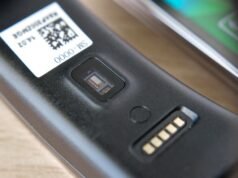
Optical sensors read blood flow through skin using light, and that signal gets unreliable underwater because water pressure changes how the sensor sits against your wrist, and the repetitive flexing motion of freestyle or backstroke creates noise the algorithm can’t filter out well. Watches like the Apple Watch Ultra 2 and Garmin Forerunner 265 will log a swim and give you an average HR at the end, but that number is often smoothed or estimated rather than a clean continuous read, especially during hard interval sets where you actually want to know if you hit your target zone.
Chest straps: the more reliable underwater option
A chest strap using electrical signal detection (the same method as an ECG) rather than optical light is inherently more water-tolerant, since it doesn’t depend on light penetration through skin. The Garmin HRM-Pro Plus and Polar H10 both store HR data internally during a swim (since Bluetooth can’t transmit live underwater) and sync it to your watch or phone afterward. This gives you second-by-second HR data for the whole set, not just an average, which is what you actually need to evaluate whether your intervals were hard enough or your recovery laps were easy enough.
What to prioritize when choosing
- Internal memory/storage — since live Bluetooth transmission doesn’t work underwater, the strap needs to store data and sync afterward. Both the HRM-Pro Plus and Polar H10 do this.
- Strap comfort for long sets — chest straps that fit loosely can shift during flip turns, which introduces the same kind of noise optical sensors have. A snug, sport-specific fit matters more for swimming than for running.
- Compatibility with your existing watch — the Polar H10 pairs broadly across Garmin, Polar, and third-party apps, while the Garmin HRM-Pro Plus is optimized specifically for Garmin devices. Check your existing watch before buying a strap that only half-integrates.
- Battery life and replaceability — both major straps use a standard coin-cell battery you can replace yourself, which matters over a multi-year training cycle.
What about swim-specific watches?
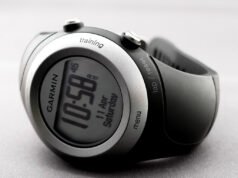
Dedicated swim watches like the Garmin Swim 2 are built around stroke count, pace, and SWOLF (a stroke-efficiency score combining time and stroke count per lap) rather than continuous HR, and their wrist-based HR during swims has the same optical limitations described above. If HR accuracy during the swim itself is your priority, a chest strap paired with any GPS/fitness watch beats a swim-specific watch’s built-in optical sensor.
Comparison: HR tracking options for swimming
| Option | Underwater HR accuracy | Data during vs after | Best for |
|---|---|---|---|
| Garmin HRM-Pro Plus (chest strap) | High — electrical signal, water-tolerant | Stores internally, syncs after swim | Garmin watch owners doing structured interval sets |
| Polar H10 (chest strap) | High — electrical signal, water-tolerant | Stores internally, syncs after swim | Anyone wanting broad watch/app compatibility |
| Apple Watch Ultra 2 (wrist optical) | Moderate — averages tend to smooth out interval detail | Live estimate, less reliable underwater | Casual swimmers who don’t need interval-level HR |
| Garmin Swim 2 (wrist optical) | Moderate, same optical limitations | Live estimate, prioritizes stroke/pace over HR | Swimmers who care more about stroke metrics than HR |
Getting a reliable read: practical tips
Wet the strap’s electrode pads before putting one on — a dry strap gives an intermittent or flat-out wrong signal for the first several minutes. Position the strap snugly just below the chest muscles, and check the fit again after your warm-up laps since straps can loosen slightly once wet. If you’re doing a hard interval set and the number looks implausibly low or erratic, it’s usually a strap contact issue rather than an actual physiological reading — readjust rather than trusting the number blindly.
FAQ
Do wrist-based watches work at all for swim HR?
They’ll log something, but treat it as a rough average rather than a reliable interval-by-interval number — the optical sensor’s underwater limitations are a physics problem, not something firmware updates fix.
Can I use a chest strap and a swim watch together?
Yes, and that’s the setup that gives you the most complete picture — stroke/pace data from the watch, accurate HR from the strap, synced together after the session.
How much does a reliable swim HR strap cost?
Expect to pay around $90 for the Polar H10 and around $100 for the Garmin HRM-Pro Plus, which is a modest add-on cost relative to what most swim watches already cost.
Does open water swimming change any of this?
The same underwater limitations apply, plus GPS accuracy becomes its own separate challenge in open water — but HR-wise, a chest strap is still the more reliable choice over wrist optical.
The verdict
For genuinely useful heart rate data in the pool, a chest strap that uses electrical rather than optical sensing — the Garmin HRM-Pro Plus or the Polar H10 — beats every wrist-based watch on the market right now. Pick based on which ecosystem your existing watch belongs to, and don’t expect a smartwatch’s optical sensor to give you trustworthy interval-level HR data underwater no matter how new the model is.